
The Times – 27th October 2026
The head of Auberge Collection has nothing but praise for the city as the group gears up for its first UK opening at the former In and Out club in Piccadilly
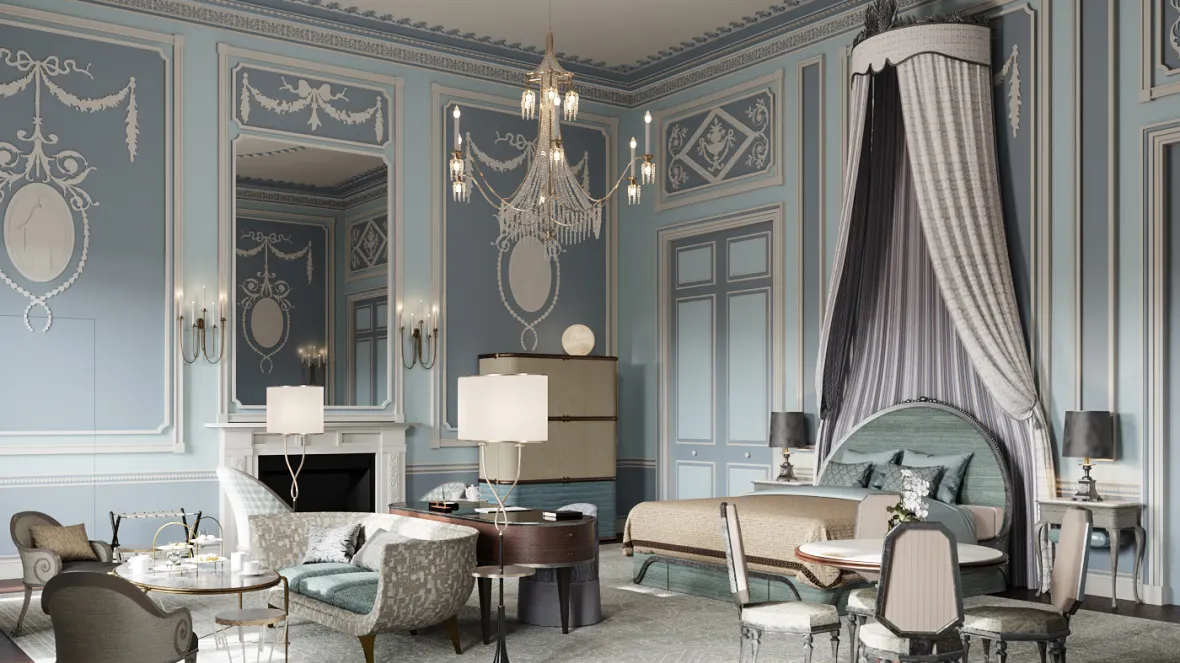
One of the bedrooms at Cambridge House
Some Britons love a good moan, especially when it comes to London, but the chief executive of the ultra-luxury hotel company Auberge Collection isn’t buying the doom and gloom. Christian Clerc doesn’t have a bad word to say about the capital, which he says is “one of the greatest destinations in the world”. The city sits at the top of “everyone’s bucket list”, the Swiss says matter-of-factly from the plush Mayfair lounge he sits in, looking unfazed by the grey and windy drizzle outside.
The company is gearing up to open its first hotel in London in the spring. Not just in any location, but 94 Piccadilly, home of the storied grade I-listed Palladian mansion owned by the billionaire Reuben brothers, who tapped Auberge Collection to breathe new life into the historic halls as Cambridge House Auberge. The building, commissioned by the 2nd Earl of Egremont in 1756, is steeped in centuries of political and social drama: it played host to Queen Victoria and was the home of Lord Palmerston, who served twice as prime minister. But it is probably better known as the former In and Out club, the exclusive gentlemen’s enclave that boasted Rudyard Kipling, Ian Fleming and Lawrence of Arabia as members. Clerc and his team are in the process of resurrecting the building into a 102-bedroom hotel that will feature world-class restaurants, bars, a spa and a private members’ club. The hotel forms part of the Reuben brothers’ £1bn regeneration of 1.3 acres of the Piccadilly Estate.
London has no shortage of luxury hotels. As well as names such as the Ritz, Claridges and the Savoy, there has been a steady influx of newer entrants in recent years, including Raffles, which opened a 120-room hotel in the Old War Office on Whitehall in 2023, while the former American embassy was reborn as the Chancery Rosewood two years later. Hilton’s Waldorf Astoria will open at Admiralty Arch, on the corner of Trafalgar Square, this year.
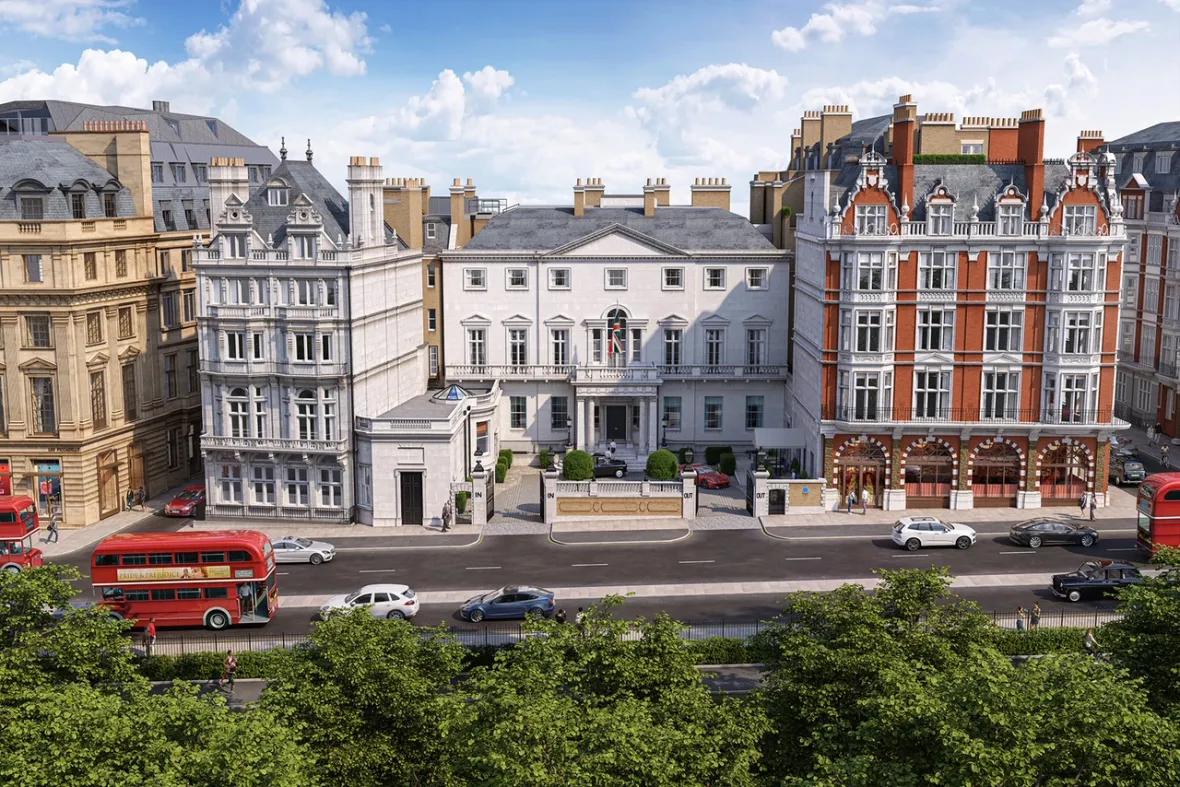
Cambridge House on Piccadilly, overlooking Green Park
However, Clerc believes that a number of new hotels that have opened in the past five years or so suffer from a predictable “sea of sameness” with cookie-cutter design formulas. “In some cases, you can pick those hotels up and put them somewhere like Dubai and they would be relevant,” he says, arguing that Cambridge House Auberge “would not make sense anywhere else but here in London”.
Auberge Collection, owned by the Friedkin Group — which also the owns Everton Football Club — has a portfolio of 39 luxury hotels, resorts and safaris spanning three continents. The company is based in Maryland in the US and it ensures that no two locations are ever alike. Because of a strong brand awareness in North America, where most of Auberge Collection’s hotels are located, Clerc expects a natural wave of US travellers to follow its debut into London. “It just so happens that Americans love coming to Europe,” he says. However, he adds that the group’s desire “is obviously that Auberge becomes a place where travellers beyond the US come and stay with us”.
VisitBritain forecasts that 5.3 million people from the US will visit the UK this year, spending an estimated £7.4bn, up 3 per cent on last year. The resilience of the US traveller, combined with fewer high-rollers from the Middle East visiting London has prompted some of the most well-known names in the luxury hotel world to shift their marketing strategies, such as Maybourne Group, the group behind Claridge’s, the Berkeley and the Connaught.
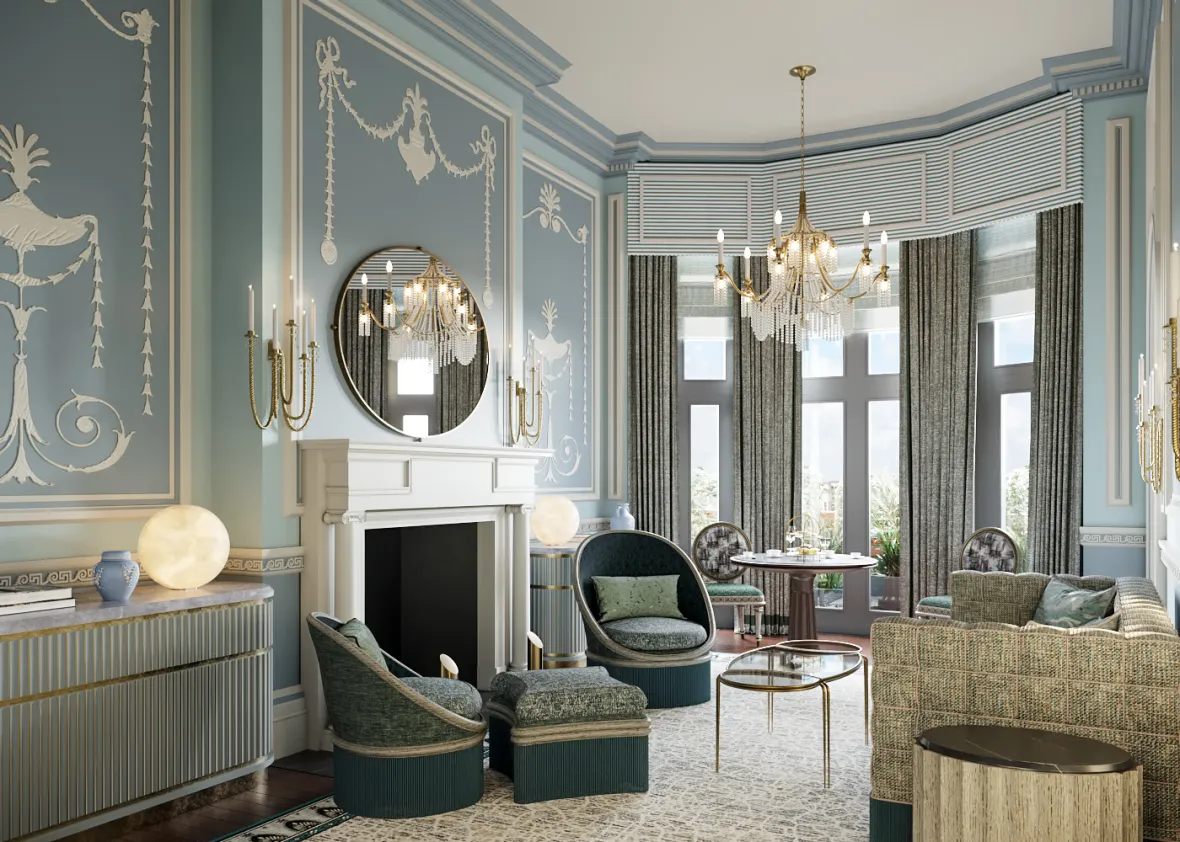
Regency Suite at Cambridge House, offering sweeping park views and expansive open-plan living
Another reason he believes Cambridge House Auberge will be successful is because of its focus on attracting locals, not just international tourists. “I think this idea that hotels are for travelers only is outdated,” Clerc says. It is something he feels some rivals miss out on. “It’s important to define our customers in a much broader lens than just hotel guests. If you come in to have afternoon tea with your daughter you are an Auberge guest. If you come and have cocktails with friends at happy hour, you are an Auberge guest.”
Clerc views exceptional dining and wellness as the ultimate gateways to luring consumers to the brand, arguing that many hotel companies “have given up” on their food beverage offering. The culinary anchor at Cambridge House Auberge will be Major’s, a new grill concept created in partnership with Major Food Group, the team behind the New York hit Carbone, where guests should expect to see lavish tableside preparations, caviar and seafood towers.
While it sounds posh, Clerc insists that the atmosphere will be unpretentious — there will be no strict dress codes or arbitrary rules. Beyond the dining rooms, the hotel will house a three-storey wellness sanctuary featuring hydrotherapy facilities, a heated swimming pool, treatment rooms, a bathhouse and a gym, which Clerc hopes will garner its own following.
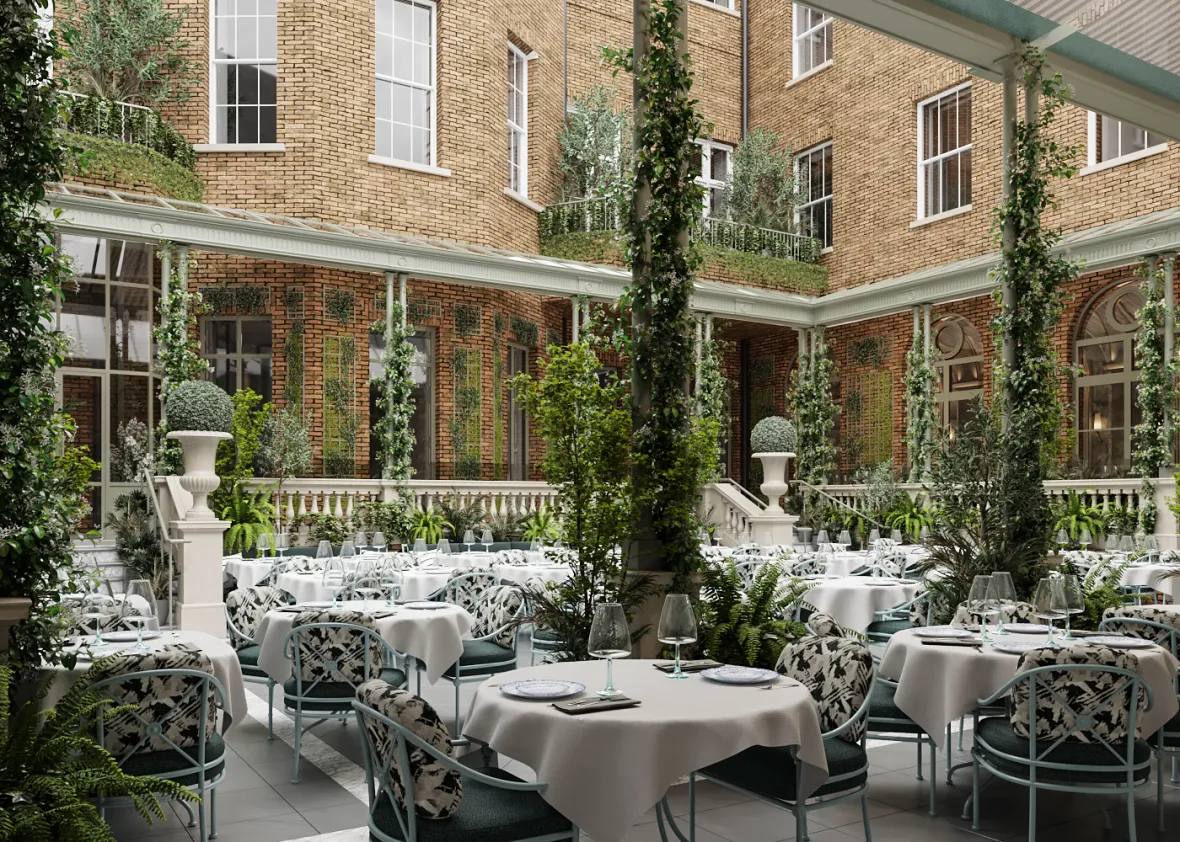
Courtyard at Cambridge House
The ripple effects of the stop-start US-Iran war would make many nervous about the prospects for the travel and hotel industry, yet Clerc remains bullish. Although the broader $350bn luxury goods sector is wallowing through a multi-year slowdown, luxury hospitality remains resilient. Experiences are the “new currency of luxury”, Clerc says, as consumers move away from traditional material status symbols such as high-end watches and designer handbags.
This shift is being increasingly driven by a younger generation of travellers. Although baby boomers and Gen X account for the majority of the Auberge Collection’s guests, Gen Z has emerged as the fastest-growing segment. “Every market, every economy goes through its ups and downs,” Clerc says, “but this world is expanding, not retracting. The generational wealth that is created globally right now is extraordinary.”