
Financial Times – 21st March 2026
After years of delays, the century-old hotel relaunches this month as a first US foray for the company behind France’s celebrated Hôtel du Cap
Florida sunlight is beginning to penetrate the depths of the Vineta hotel’s still cool courtyard as entrepreneur Richard Laver finishes breakfast and picks up a $2,000 Goyard Chien Gris bag containing Fu Fu, his Teacup Pomeranian. I’m with the hotel’s publicists, who move in, cooing.
“Smile for the girls,” Laver says, his dining companion Vince Spadea, a former professional tennis player, looking on. Someone compliments Fu Fu on her transport, causing Richard to glance towards the other diners scattered under a towering royal palm, and mutter: “There’s someone else here with their dog in exactly the same bag.”
Welcome to Palm Beach, the 18-mile-long, cigarette-wide barrier island north of Miami that hosts one of the world’s greatest concentrations of wealth.
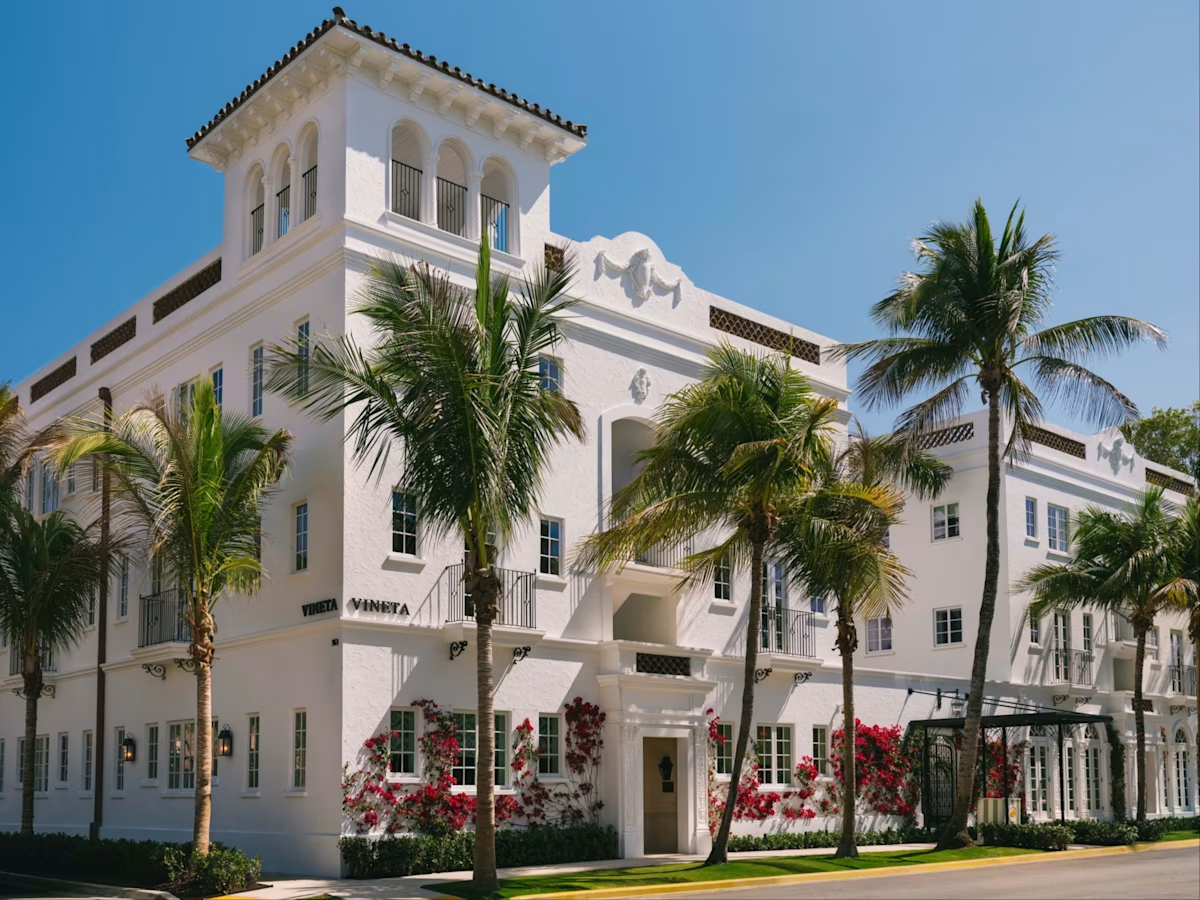
The facade of the refurbished hotel…
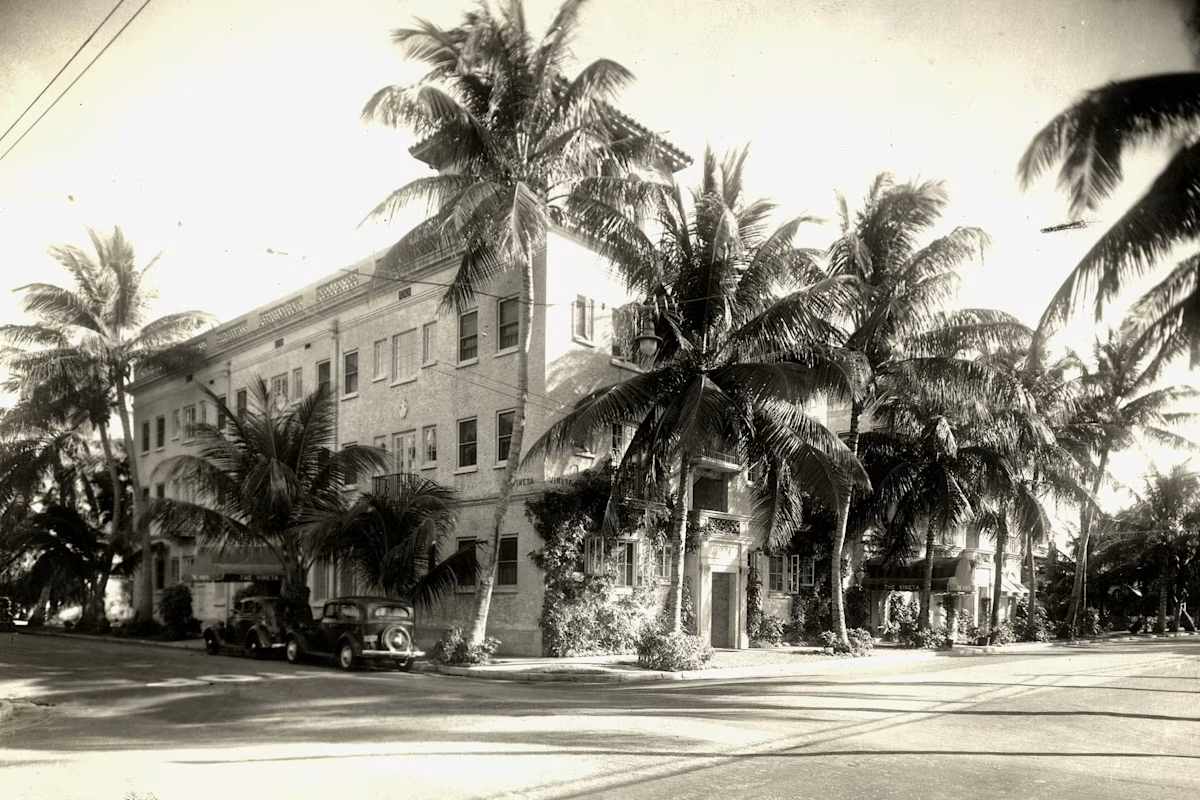
… and the hotel in 1936, 10 years after it opened © Courtesy of the Historical Society of Palm Beach County
The Venetian-styled Vineta is its newest hotel, opening at the beginning of March, though it has 100 years of heritage. With just 41 rooms, it is owned by the Reuben brothers, the British property developers, and is the first US outpost from Oetker, a German hospitality management company responsible for storied getaways such as Le Bristol in Paris, Hôtel du Cap in Antibes and Eden Rock in St Barths.
It has been much delayed due to struggles with the town council. As far back as December 2022, the FT was listing the Vineta as an exciting opening for the coming year. “I guess we were perhaps a little too optimistic in the beginning,” Timo Gruenert, Oetker’s CEO, will tell me.
Any scars are well hidden. Even in its opening week, the hotel couldn’t be more serene. Behind Richard, waiter Ali Tilki — “Turkish for fox,” he says — moves delicately across the red tiles of the courtyard, carrying superb coffee. Strands of star jasmine climb the white walls around him, green- framed doors giving on to a cocktail bar on one side, Coco’s restaurant on the other.
Richard’s friend Vince is now a Palm Beach real estate agent, so I ask the average house price on the island, suggesting $15mn. “Oh, more than that, I think,” he smiles. How will the Vineta fit in? “Many high-end places lack an attention to kindness,” Richard replies. “But not here — it’s an outlier in that respect.”
I’ve arrived from my home in Havana, which would be a shocking transition at the best of times but is particularly disconcerting right now given Cuba is under an oil blockade imposed by another Palm Beach resident, US President Donald Trump, whose Mar-a-Lago Club is up the road.
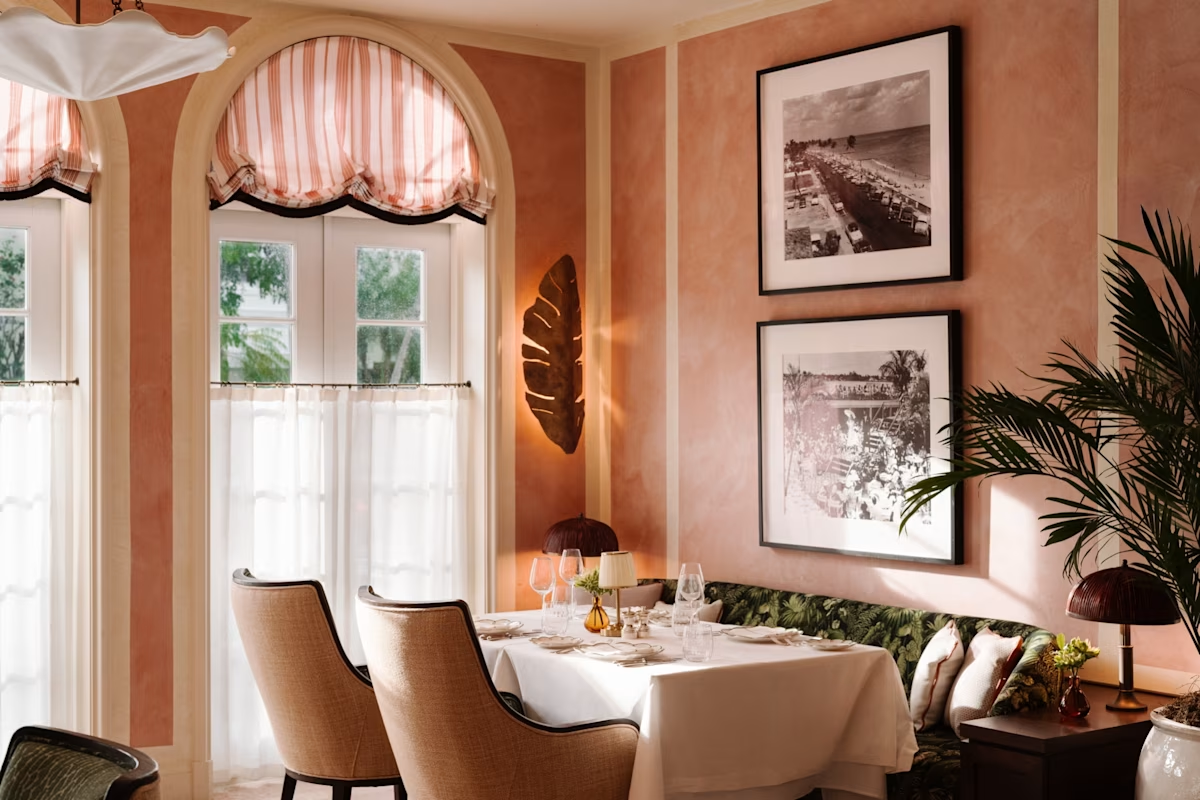
Coco’s, the Vineta’s restaurant, overseen by chef Brian Rodriguez
After an hour’s flight to Miami and a slightly longer drive, I had crossed a bridge over Lake Worth Lagoon and landed among flawlessly groomed streets, galleries selling art by Sylvester Stallone (a local), and tanned-looking residents in the vintage Lilly Pulitzer prints that are considered “Palm Beach style”.
The community is 150 years old, one of the very first perches on the Florida coast for “snowbirds”, wealthy people escaping the harsh northern winters.
A ship, the Providencia, was wrecked on the beach in 1878, carrying 20,000 coconuts en route to Barcelona. The first settlers planted the coconuts in a bid to create a commercial crop. In 1880, a clapboard house became the Cocoanut (sic) Grove, at the time the only hotel between Titusville, about halfway down Florida’s length, and Key West at its southern tip.
That would soon change. Henry Flagler, one of the founders of Standard Oil, drove a railroad down the coast. It arrived at Palm Beach in 1896, delivering guests to his new Royal Poinciana hotel, which would grow to have more than 1,000 rooms (and be frequently billed as both the world’s largest hotel and biggest wooden building). Flagler made Palm Beach his winter home and built a 75-room mansion for his third wife Mary Lily — after he’d consigned his second, Ida Alice, to a mental asylum. The town became a beacon for the wealthy, a draw it’s never lost.
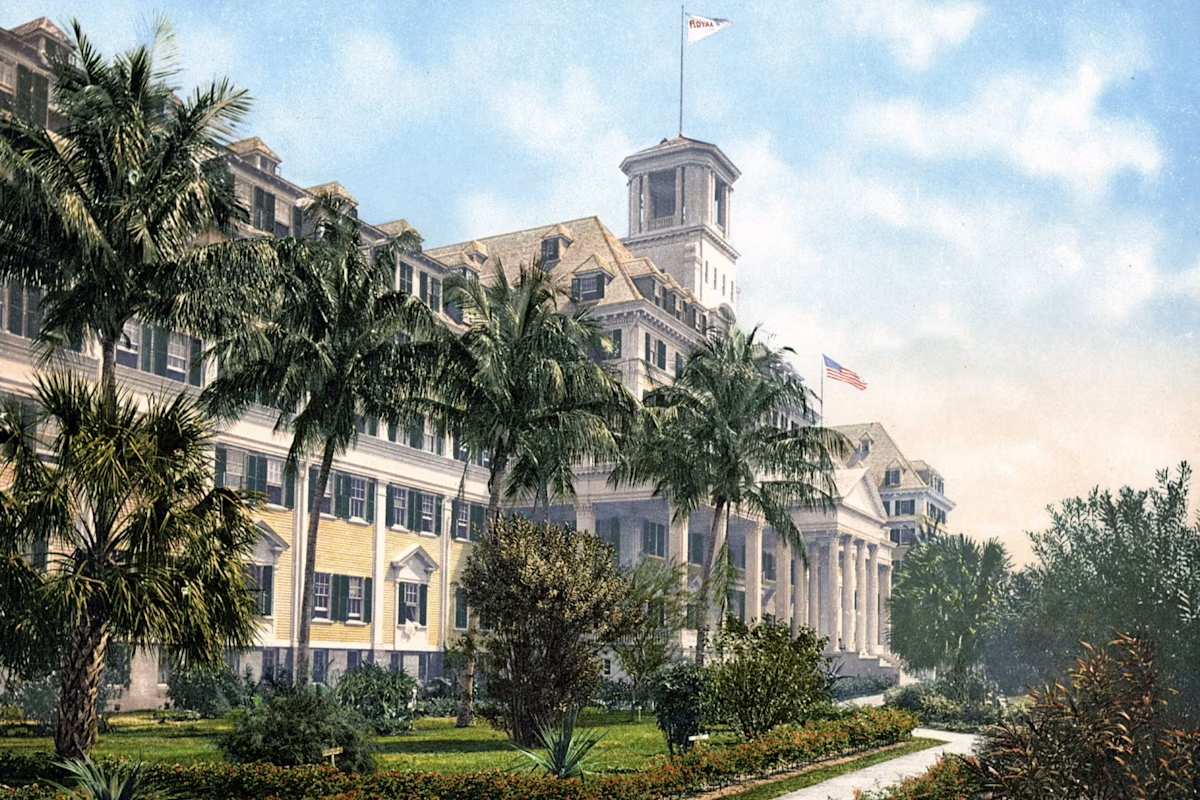
Henry Flagler’s Royal Poinciana Hotel circa 1900. It opened in 1894 and played a key role in turning Palm Beach into a fashionable winter destination © Alamy
The Vineta started out in 1926 as the Lido-Venice. It stands, white and gleaming, on a corner close to Worth Avenue (named after a 19th-century army major, though you also have to be worth a lot to shop there). It’s very boutique, the building’s size restricting the ground floor to its killer cocktail bar, “authentic Mediterranean” restaurant Coco’s, and a small but lovely pool with a green striped bottom and its own little café. I have a silly tradition of a martini followed by a burger when I arrive in the US, and the Vineta’s poolside versions are paragons of the art.
The rooms upstairs are equally calming. Pale walls give on to darker ceilings, bordered by bamboo- style mouldings. The mattress is so good I feel like I’m levitating. Wooden floors lead to bathrooms big and well-appointed enough to pass time dealing with those little concerns — what’s that hair doing there? — that I ignore at home.
The Reubens bought the hotel in 2022, when it was the Chesterfield and had decor not unlike the sofa of the same name. “The first time I actually saw the building was on Instagram,” Jamie Reuben tells me via text message. “A friend was the owner and had posted it, and I responded by saying ‘great hotel’ and she asked if I’d ever be interested in purchasing it.”
The Chesterfield’s bar, the Leopard Lounge, was famously louche. It played host to Rod Stewart, obviously, and perhaps less obviously, Margaret Thatcher. But it was the courtyard that attracted Jamie Reuben. “It seemed like the heart and oxygen of the building,” he says. “It felt very European.” The Reubens returned to a name the hotel had used between 1928 and 1977, the Vineta.
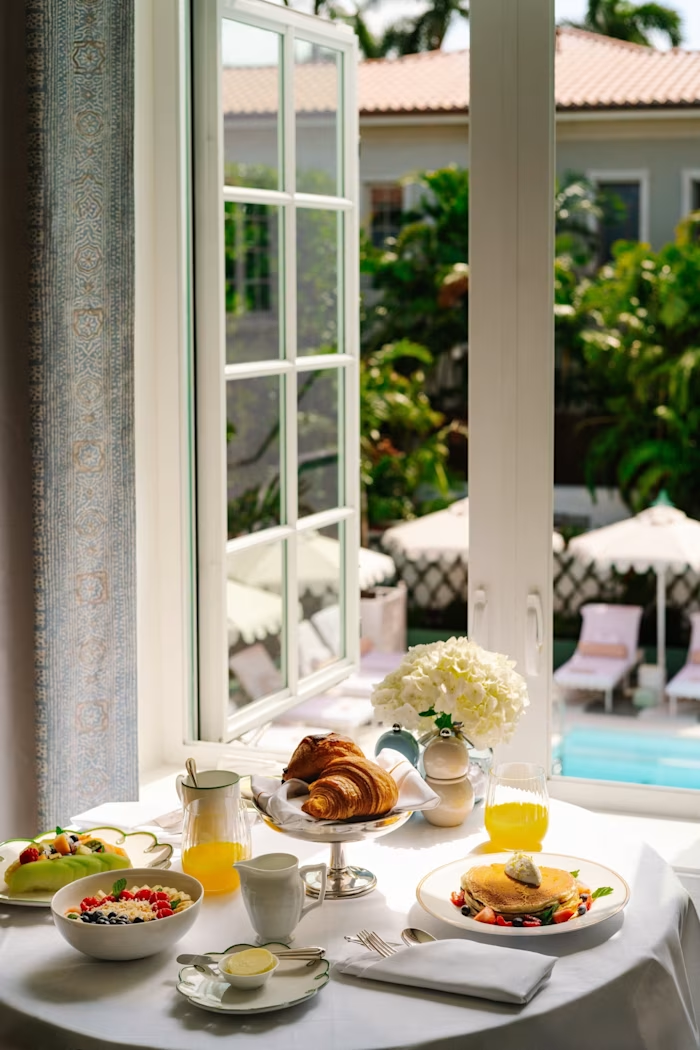
Breakfast in the presidential suite, overlooking the pool area
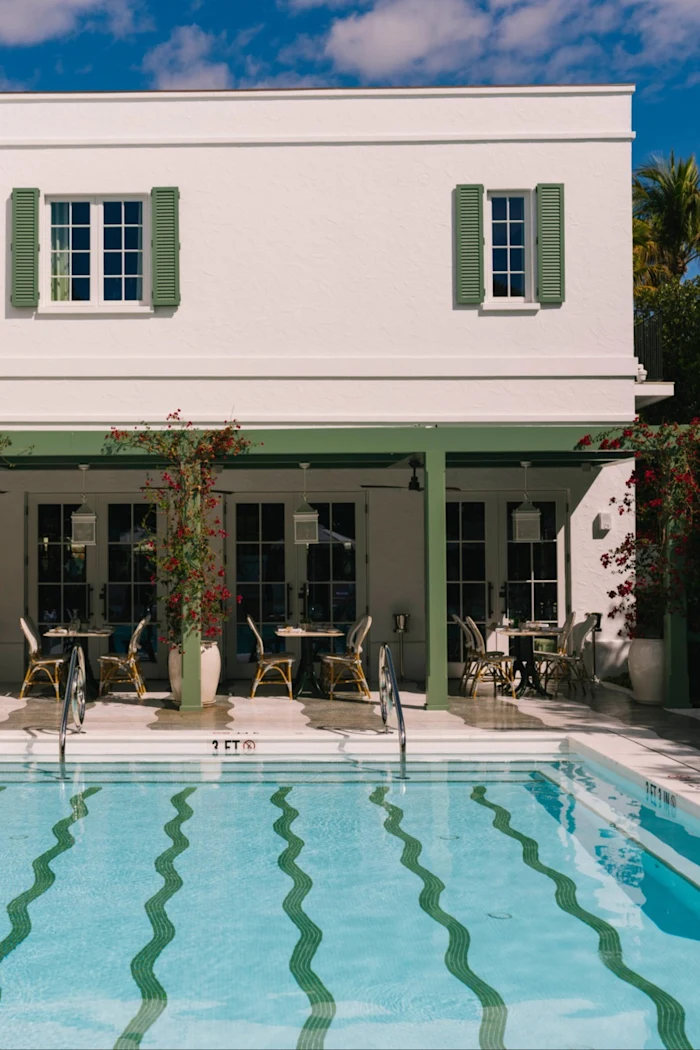
The swimming pool at the Vineta
I take a tour of the town with two of Palm Beach’s finest, Karen Stone Talwar of Adventures in Art and Leslie Diver of Island Living Tours. Leslie usually conducts her tours by foot or bike, but we borrow the Vineta’s house Rolls-Royce, which guests can use for free so long as they don’t leave the island.
Leslie rattles through some facts. Palm Beach is home to 64 billionaires, she tells me. The Glazers, owners of Manchester United, are here, as are heirs to the Estée Lauder fortune and President Trump’s Middle East envoy, the developer Steve Witkoff. In 1986, the average age was 72 but it is now 55, mainly thanks to younger hedge funders and venture capitalists. High walls are banned, so hedges, as plucked and groomed as the residents themselves, are leaned on for privacy.
In the 1920s, the architect Addison Mizner gave the town its signature Mediterranean revival feel. Leslie points out one of his houses, belonging, I think, to the thriller writer James Patterson: “The red barrel tile, choppy roofline, different size windows.”
We turn down the street where Jeffrey Epstein lived. The fallout is still roiling the community. We discuss this as we arrive at a police roadblock, as close as we can get to Trump’s Mar-a-Lago which straddles the island as its name (sea-to-lake) suggests. We head back north along the seafront, a narrow beach being pounded by Atlantic waves where brave folks are foilboarding. It’s all quite American suburban, if at a very “elevated” level, to use the local euphemism.
But there are truly beautiful parts. We arrive at the Society of the Four Arts, a cultural centre set up in 1936, whose garden is peaceful, beautiful and public. Children are gathering under a great canvas awning for the twice-weekly storytelling session. Karen takes me through the Society’s fabulous exhibition of art nouveau furniture. The New York City Ballet has just performed and Wynton Marsalis will close the season. Palm Beach revolves around philanthropic soirees, with a riptide of donated money that draws in astonishing talent, and which visitors can plug into.
Finally, we pull up in front of the Flagler Museum, the mansion Henry Flagler made his winter home. In the distance, across a golf course, we can see the Breakers, the celebrated ocean-front resort he built after the Royal Poinciana proved a hit (and, despite burning down twice, still open 130 years later).
Scratch the surface, and Flagler was clearly a terrible man, hard on his wives, worse still on his all but enslaved workers. But Campbell Mobley, the museum’s elegant curator, gives a warm and genteel tour. Sugar coating scandal is nothing new around here.
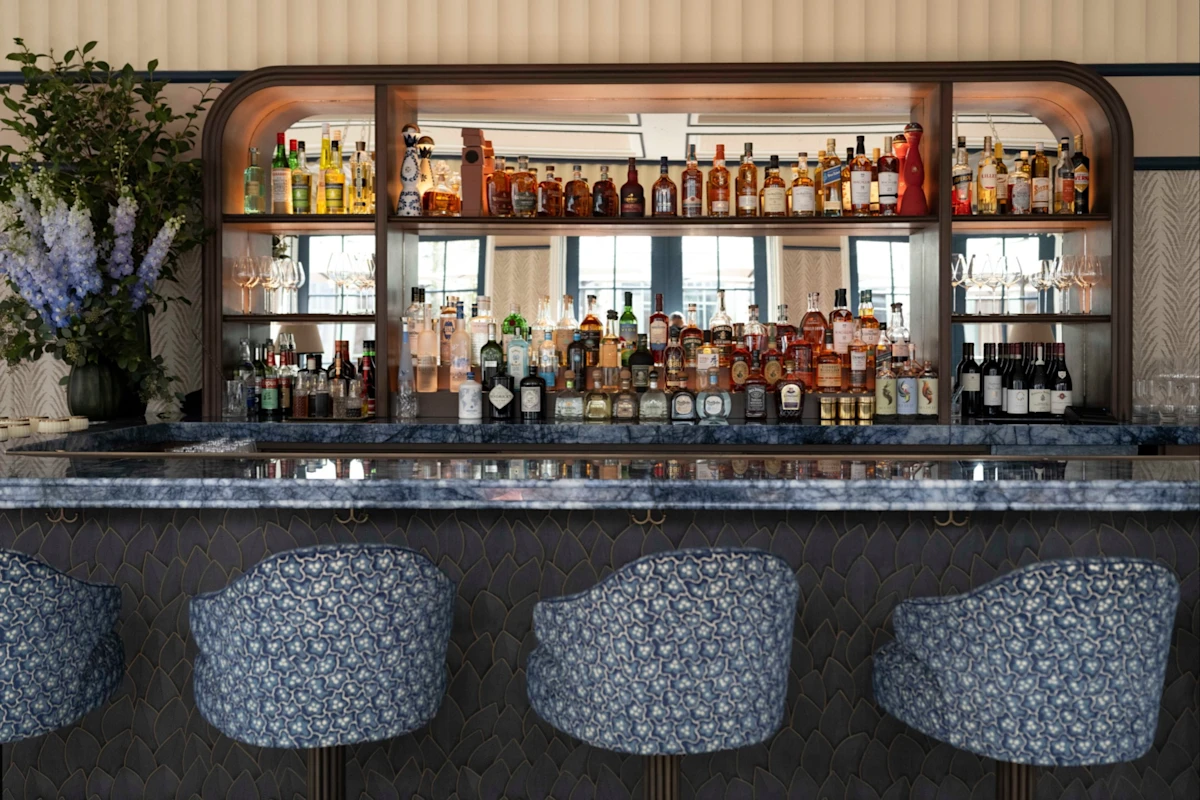
The Vineta’s bar
It’s through this society that the Reubens and Oetker had to negotiate their rebuild. In the end, the town council made them return three times until they’d scaled back their plans enough to convince the neighbours it wouldn’t all be too noisy and annoying. “There’s no point in telling this council you are going to bring investment,” a resident tells me with a laugh. “It just insults them.”
I dine in Coco’s, a subtle nod to seamier times in a leopard moulded white on white in the ceiling above. Many of the recipes being cooked by Spanish chef Brian Rodriguez have been imported from the Hôtel du Cap, to appeal to a local clientele who often holiday there. I eat morel gnocchi and then sea bass, world-class comfort food.
Meanwhile, local residents are still spilling in to have a look. As I am finishing dinner, Aerin Lauder, heir to the Estée Lauder fortune, slides by, wearing perhaps the most exquisite earrings I’ve ever seen.
Coming from benighted Havana, it can feel a bit much but everyone I’ve met has been welcoming and kind, from the affable doorman Ray Merritt to the other guests. After meeting Richard Laver at breakfast, I’d watched him slip into a white Porsche at the Vineta’s front door. “That’s his wife’s car,” his friend Vince told me. “He drives a Ferrari Portofino, but Fu Fu doesn’t like the bumpy ride.”